
Dry Scalp Treatment for Women Over 40

Dry scalp treatment becomes increasingly important for many women over 40 as hormonal changes, aging skin, and lifestyle factors begin affecting scalp health. A dry, itchy, or flaky scalp can feel uncomfortable and may also impact hair texture and confidence. While occasional dryness is common, persistent scalp irritation often signals that the scalp barrier needs additional care and hydration.
Women in their 40s and beyond may notice changes in their hair and scalp during perimenopause and menopause. Declining estrogen levels can reduce natural oil production, making the scalp more sensitive and prone to dryness. Environmental stressors, harsh hair products, heat styling, and stress can also contribute to discomfort.
Understanding the causes of scalp dryness is the first step toward finding the right dry scalp treatment routine. With proper care, hydration, and professional support when needed, many women can improve scalp comfort and maintain healthier-looking hair.
Key Takeaways
- Dry scalp becomes more common after 40 due to hormonal and skin barrier changes
- Perimenopause can reduce natural oil production and increase scalp sensitivity
- Gentle, hydrating scalp care is often more effective than harsh dandruff treatments
- Ingredients like hyaluronic acid, aloe vera, ceramides, and niacinamide may help soothe dryness
- Consistent scalp care habits can improve comfort, hydration, and hair health over time
- Professional scalp treatments may help with persistent dryness and irritation
Why Is Dry Scalp More Common in Women Over 40?
Many women experience noticeable scalp changes as they age. Reduced oil production and hormonal fluctuations can make the scalp more vulnerable to irritation and dehydration.
As estrogen levels decline during perimenopause and menopause, the scalp may produce less sebum, which is the natural oil responsible for maintaining moisture. This reduction can leave the scalp feeling tight, flaky, or itchy.
Aging also affects the skin barrier. Over time, the scalp becomes less effective at retaining hydration, making it more sensitive to environmental factors such as cold weather, sun exposure, and harsh hair products. Lifestyle habits, stress, poor sleep, and frequent heat styling may further contribute to dryness.
What Causes Dry Scalp in Perimenopause?
Perimenopause often brings hormonal changes that affect both skin and scalp health. Many women notice increased dryness, sensitivity, and irritation during this stage of life.
Declining estrogen levels play a significant role because estrogen helps support collagen production, hydration, and healthy oil balance. Lower hormone levels can lead to a weaker skin barrier and less natural moisture.
Stress and disrupted sleep patterns may also increase inflammation, which can worsen scalp sensitivity. Frequent coloring treatments, chemical services, overwashing, and heat styling can strip away essential oils and intensify dryness.
In some cases, nutritional deficiencies or underlying scalp conditions may contribute to symptoms. Persistent irritation should always be evaluated by a healthcare professional.
How Do You Know If You Have Dry Scalp or Dandruff?
Dry scalp and dandruff can appear similar, but they often have different causes and may require different treatment approaches.
Dry scalp is usually caused by a lack of moisture. It often results in small, dry flakes accompanied by tightness, itching, or irritation. Dandruff, on the other hand, is commonly associated with excess oil production and an overgrowth of yeast on the scalp. Dandruff flakes are often larger and may appear oily or yellowish.
Using harsh anti-dandruff products on a dry scalp may worsen irritation and strip away natural oils. Understanding the difference can help women choose the most effective dry scalp treatment products and routines.
What Are the Common Symptoms of Dry Scalp?
Dry scalp symptoms can range from mild discomfort to persistent irritation that affects daily life. Recognizing early signs can help prevent worsening dryness.
Common symptoms include:
- Flaking or shedding of dry skin
- Itching or tightness
- Redness or irritation
- Sensitivity after washing hair
- Dry or rough hair texture
- Discomfort during colder seasons or after heat styling
Symptoms may become more noticeable during hormonal changes, seasonal weather shifts, or periods of stress.
How to Treat Dry Scalp for Adults?
A consistent scalp-care routine focused on hydration and gentle cleansing can significantly reduce dryness and irritation. Choosing the right habits and products is essential for long-term scalp health.
Use a Gentle, Hydrating Shampoo
Women with dry scalp should choose sulfate-free shampoos designed to maintain moisture and protect the scalp barrier. Ingredients such as aloe vera, glycerin, oat extract, and ceramides may help soothe irritation while cleansing gently.
Avoid harsh shampoos containing excessive alcohols or strong fragrances, as these ingredients may worsen dryness.
Avoid Overwashing Your Hair
Frequent washing can strip the scalp of its natural oils. While every scalp is different, many women benefit from washing less frequently and using lukewarm water instead of hot water.
Allowing the scalp to retain some natural oils may help improve hydration and reduce irritation.
Add Scalp Serums and Moisturizing Treatments
Hydrating scalp serums and lightweight oils can support moisture retention and comfort. Products containing hyaluronic acid, niacinamide, or botanical oils may help calm dryness.
Overnight scalp treatments may also provide additional hydration for severely dry or irritated scalps.
Exfoliate the Scalp Carefully
Gentle scalp exfoliation can remove buildup, dead skin cells, and excess product residue. However, over-exfoliating may worsen irritation.
Using a mild exfoliating treatment once weekly may help improve scalp balance without causing additional dryness.
Protect the Scalp From Heat and Sun Exposure
Excessive heat styling and UV exposure can contribute to scalp dehydration. Limiting hot tools and using protective products may help reduce moisture loss.
Wearing hats outdoors and avoiding excessive sun exposure may also protect the scalp barrier.
Improve Hydration and Nutrition
Healthy scalp function is closely connected to overall wellness. Drinking enough water and maintaining a balanced diet rich in omega-3 fatty acids, vitamins, and antioxidants may support scalp hydration.
Nutrients such as vitamin D, zinc, and biotin may also contribute to healthier skin and hair.
What Ingredients Work Best for Dry Scalp Treatment?
Certain ingredients may help restore moisture, calm irritation, and support scalp barrier health. Understanding what to look for can make product selection easier.
Common ingredients used in dry scalp treatment products include:
- Hyaluronic acid for hydration
- Aloe vera for soothing irritation
- Ceramides to strengthen the skin barrier
- Niacinamide to calm inflammation
- Coconut oil for moisture support
- Oat extract for sensitive skin
- Tea tree oil for balancing the scalp when used appropriately
Women with sensitive skin should patch test new products and avoid overly harsh formulas.
Can Stress and Hormonal Changes Make Dry Scalp Worse?
Hormonal fluctuations and chronic stress can significantly impact scalp health. Many women notice worsening dryness during periods of emotional stress or hormonal transition.
Stress increases cortisol levels, which may disrupt the skin barrier and contribute to inflammation. Poor sleep quality can further reduce the scalp’s ability to retain moisture.
Managing stress through exercise, self-care, proper sleep, and relaxation techniques may support both scalp and overall wellness.
Are Professional Dry Scalp Treatments Worth It?
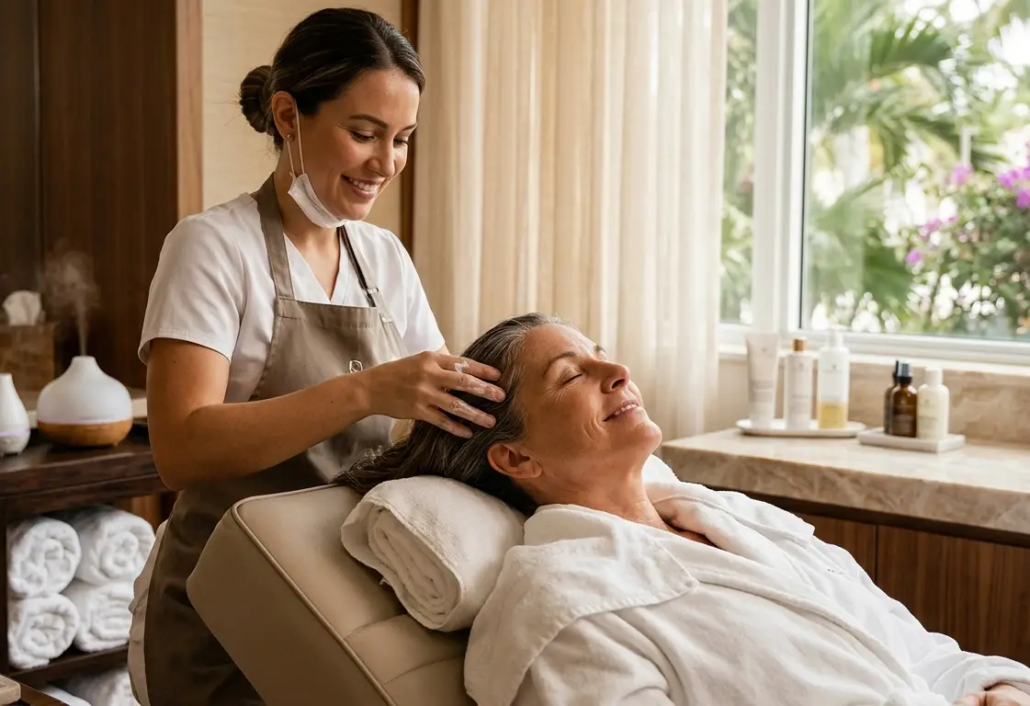
Professional scalp treatments may benefit women experiencing persistent dryness, irritation, or buildup that does not improve with home care.
Many spas and wellness centers offer hydrating scalp therapies designed to nourish the scalp and improve circulation. These treatments may include exfoliation, scalp massage, moisturizing masks, and specialized serums.
Professional treatments can also help identify underlying concerns and provide personalized recommendations based on individual scalp needs.
What Habits Make Dry Scalp Worse?
Certain daily habits may unknowingly contribute to scalp dryness and irritation. Adjusting these habits can support healthier scalp balance.
Common habits that may worsen dry scalp include:
- Using harsh shampoos
- Taking frequent hot showers
- Overusing dry shampoo
- Skipping conditioner
- Excessive heat styling
- Frequent chemical treatments
- Scratching or over-exfoliating the scalp
Making small adjustments to daily hair care routines may improve scalp comfort over time.
Can Hair Products Cause Dry Scalp?
Some hair products contain ingredients that may irritate sensitive scalps or disrupt the skin barrier.
Alcohol-based sprays, heavily fragranced products, and certain dyes may contribute to dryness and itching. Product buildup may also block moisture absorption and increase irritation.
Women experiencing scalp discomfort after using specific products should consider switching to gentler, hydrating formulations.
How Long Does It Take to Improve Dry Scalp?
Dry scalp improvement often depends on the severity of symptoms, consistency of care, and underlying causes.
Mild dryness may improve within a few weeks after switching to gentler products and improving hydration habits. More persistent dryness related to hormonal changes or skin conditions may require longer-term management.
Consistency is important. Following a gentle scalp care routine and avoiding irritating products can help support gradual improvement.
When Should You See a Professional for Dry Scalp?
While mild dryness is common, persistent or severe symptoms may require professional evaluation.
Women should consider seeking professional care if they experience:
- Severe itching or burning
- Persistent flakes despite treatment
- Hair thinning or excessive shedding
- Painful scalp irritation
- Red patches or inflammation
- Symptoms of eczema or psoriasis
A scalp care specialist can help determine the underlying cause and recommend appropriate treatment options.
What Is the Best Dry Scalp Treatment Routine for Women Over 40?
Creating a consistent scalp care routine can help maintain hydration, comfort, and healthier hair over time. Women over 40 often benefit from routines focused on moisture retention and gentle care.
Morning Scalp Care Routine
- Use a gentle hydrating shampoo when washing hair
- Apply lightweight scalp serums or leave-in hydration products
- Protect the scalp from excessive sun exposure
- Avoid harsh styling products and excessive heat
Weekly Scalp Treatments
- Use a gentle scalp exfoliator once weekly
- Apply nourishing scalp masks or oils
- Incorporate scalp massage to improve circulation
- Avoid overwashing to maintain natural oils
Nighttime Hydration Tips for Dry Scalp
- Apply overnight scalp treatments or lightweight oils
- Use a silk or satin pillowcase to reduce irritation
- Avoid sleeping with wet hair
- Maintain indoor humidity to prevent scalp dryness overnight
Frequently Asked Questions About Dry Scalp Treatment for Women Over 40
This section answers some of the most common questions women have about scalp dryness, hormonal changes, and effective treatment options.
What is the best dry scalp treatment for women over 40?
The best treatment often includes gentle cleansing, hydration-focused scalp products, reduced heat exposure, and consistent moisture support. Professional scalp treatments may also help persistent dryness.
Can menopause cause dry scalp?
Yes. Hormonal changes during menopause can reduce natural oil production and contribute to scalp dryness and sensitivity.
How often should you wash your hair if you have dry scalp?
Washing frequency varies by individual, but many women with dry scalp benefit from avoiding overwashing and using gentle shampoos.
Is coconut oil good for dry scalp?
Coconut oil may help moisturize the scalp for some individuals. However, results can vary depending on scalp type and sensitivity.
What vitamin deficiency causes dry scalp?
Deficiencies in vitamin D, zinc, omega-3 fatty acids, and certain B vitamins may contribute to dry skin and scalp issues.
When should you see a doctor for dry scalp?
Seek professional care if symptoms are severe, painful, persistent, or accompanied by hair loss or inflammation.
Can scalp treatments help aging hair and scalp?
Professional scalp treatments may improve hydration, circulation, and scalp comfort while supporting healthier-looking hair.
Does drinking more water help dry scalp?
Proper hydration supports overall skin health and may help improve scalp moisture when combined with a healthy scalp care routine.
Supporting Long-Term Scalp Health After 40
Maintaining scalp health after 40 often requires a combination of hydration, gentle care, and consistent wellness habits. Addressing dryness early can help prevent ongoing irritation and improve overall comfort.
Professional scalp and wellness treatments may provide additional support for women experiencing persistent dryness or sensitivity. Baden Spa & Wellness is a premier day spa in Palm Beach, FL, offering personalized wellness and self-care experiences designed to support relaxation and overall skin health. Areas served include Wellington, Loxahatchee, Lake Worth, and Royal Palm Beach.
Whether you are looking for rejuvenating spa treatments or personalized wellness care, Baden Spa & Wellness provides a relaxing environment focused on long-term beauty and wellness. Schedule your appointment today to experience professional care tailored to your needs.

